

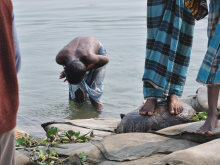
The Accademia Nazionale dei Lincei celebrates the 25th World Water Day by dedicating the 2026 edition to the theme of Hydrology and Health. The event focused on the strategic importance of water in disease prevention and control, highlighting how water systems can have a decisive influence on the spread of pathogens.
National and international experts explained how viruses, bacteria, protozoa and parasites exploit aquatic environments to survive and spread, transforming rivers, lakes, groundwater and wastewater into potential transmission routes. It was noted that historical diseases such as cholera and typhoid remain closely linked to water quality and hygiene conditions, whilst vector-borne diseases, such as dengue and chikungunya, are increasingly influenced by the presence of stagnant water and rising temperatures.
Climate change was identified as a key factor in altering the dynamics of water-related diseases. Case studies were presented, including Proliferative Kidney Disease in salmonids, demonstrating how even slight temperature fluctuations can disrupt ecological balances and prolong transmission seasons. Further contributions highlighted the impact of changes in land use — deforestation, urbanisation, intensive agriculture — in facilitating more frequent interactions between wildlife, intermediate hosts and human populations, thereby increasing the risk of spillover.
A specific focus was placed on mathematical models applied to environmental epidemiology, which are fundamental tools for understanding connectivity between ecosystems and identifying critical points in water systems. Innovative monitoring techniques were also presented, such as wastewater-based epidemiology and eDNA analysis, which enable early and non-invasive surveillance of the circulation of pathogens and vector species.
The event reaffirmed a fundamental principle: water management is now a cornerstone of public health. Investing in the quality of water resources, in research and in preventive technologies means strengthening the healthcare system’s ability to anticipate risks and protect communities. Water is thus confirmed as a strategic element for future health and environmental security.