

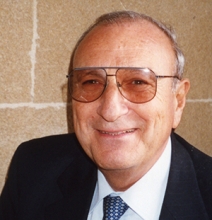
Immediately following the discovery of the laser in 1960, Orazio Svelto—then a young Nuclear Engineering graduate from the Politecnico di Milano under Emilio Gatti—quickly grasped the significance of the invention. He obtained permission from Giovanni Polvani, President of the CNR, to redirect a recently won scholarship, allowing him to travel to the United States.
He dedicated himself to this new technology at Stanford University, developing one of the university's first ruby lasers in 1961. During this time, he demonstrated its potential to a delegation of influential Italian professors sent to explore emerging scientific frontiers. Orazio often looked back on that period as a testament to the value of pure science; he frequently recalled how the laser—now the most widely applied technology of the last century—was initially dismissed as "a brilliant solution in search of a problem."
Upon returning to Italy in 1963, he pioneered a new era by founding and leading a research group dedicated to lasers, sparking a continuous series of internationally acclaimed studies. He established the CNR Centre for Quantum Electronics and Electronic Instrumentation at the Politecnico di Milano’s Institute of Physics. For decades, this laboratory served as the cornerstone for major initiatives, including the National Institute for the Physics of Matter (INFM) and the Laserlab-Europe network. The legacy of his contributions not only in the field of lasers, but also in the field of detectors, electro-optical devices, fibre propagation and medical applications, is impressive.
Orazio Svelto combines exceptional scientific aptitude with undisputed managerial skills, as demonstrated by his leadership in major initiatives, most notably the "Progetto Finalizzato Laser di Potenza" (High-Power Laser Project). As a Professor of Quantum Electronics at the Politecnico di Milano, he has mentored generations of students and researchers both in Italy and abroad, establishing a true school of excellence.
Countless scientists have mastered laser physics through his seminal textbook, Principles of Lasers. Translated into numerous languages and adopted worldwide, it remains an essential reference in the field, showcasing his extraordinary clarity and pedagogical talent.
Throughout his distinguished career, he has received many prestigious honors, including the Charles H. Townes Award from the Optical Society of America and the Quantum Electronics Prize from the European Physical Society. He was National Fellow (Socio Nazionale) of the Accademia dei Lincei, he is also a member of the Accademia dei XL (National Academy of Sciences) and the Lombard Institute Academy of Sciences and Letters.
Those who had the privilege of working directly with him were able to appreciate his critical mind, extraordinary inventiveness, and profound scientific generosity. With his infectious enthusiasm, restless intellectual curiosity, and deep expertise, he was a constant source of inspiration.
In recent decades, he was at the forefront of breakthroughs in ultrafast laser physics—lasers capable of emitting pulses so brief they can generate immense peak power or "photograph" atomic phenomena in real-time. His achievements contributed significantly to discoveries that were later recognized with the Nobel Prize. Indeed, three recent Nobel laureates are invited speakers in the program of the international conference organized to celebrate his 90th birthday in a few weeks.
Sadly, in the meantime, Orazio has "chosen" to return to his beloved Puglia, leaving behind an extraordinary scientific and human legacy.